The stage of the request
Identify requirements, checks and the next step in each case.
 GOVTECH · DATA-FIRST × AI-FIRST · MUNICIPAL OPERATIONS
TicoNeural TITAN Ecosystem
TITAN was built on a Data-first and AI-first foundation: it connects data, documents, land, inspections and authorized sources, while integrating frontier AI across nearly the entire municipal operation. Every case retains context, evidence and traceability; the municipality retains authority over official decisions.
Operational capabilities
ENGINEERING & TECHNOLOGY ECOSYSTEM
TicoNeural designs and operates TITAN and participates in OpenAI Select Partner and NVIDIA Inception. TITAN's AI workloads run in production on NVIDIA Brev.
TicoNeural · OpenAI Select Partner

TicoNeural, member of the NVIDIA Inception Program

Selected cloud workloads run on AWS
EXPLORE THE PRODUCT
Choose a situation and step through the workflow to see what the resident receives and what the municipality can oversee.
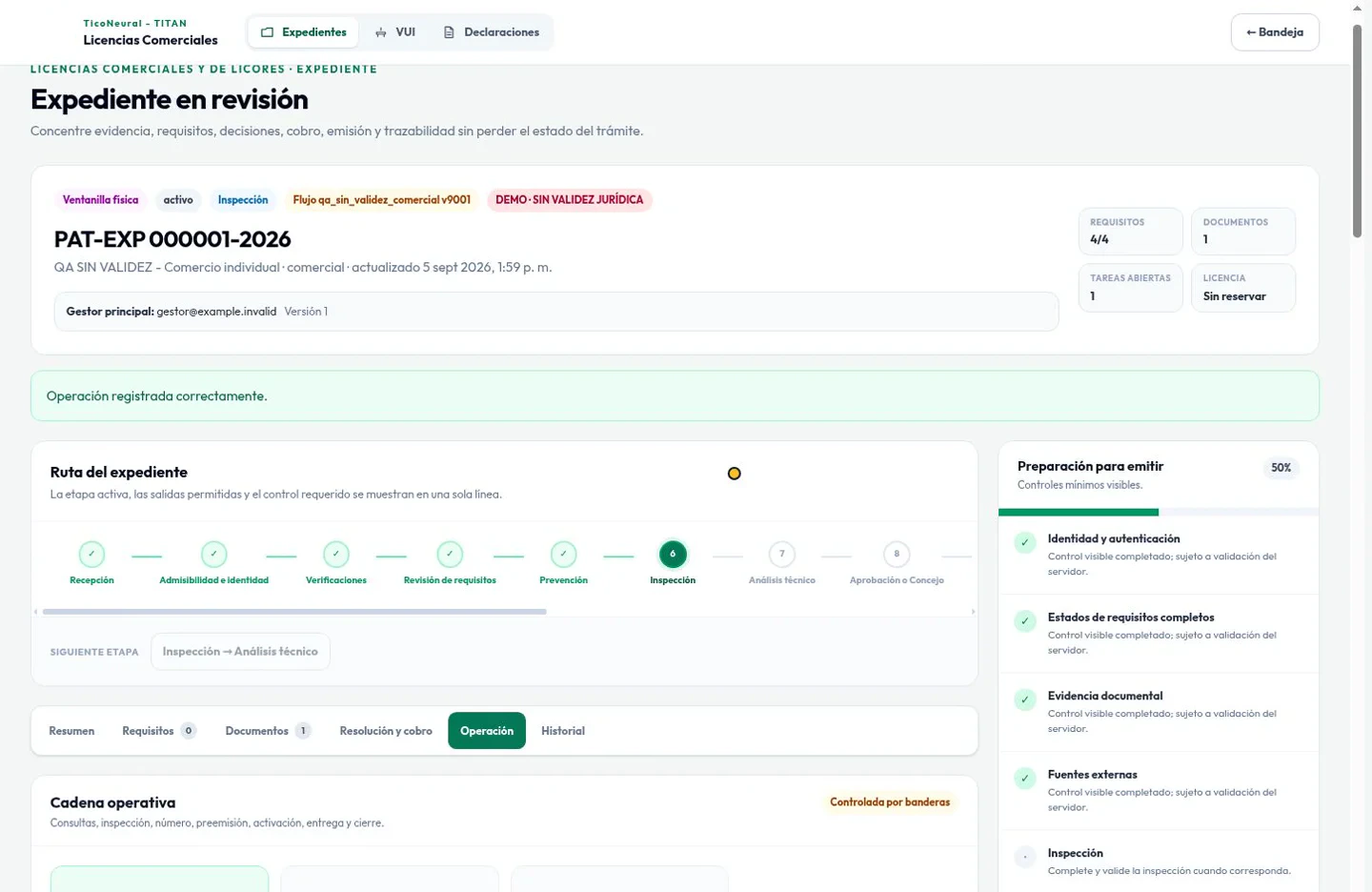
The application enters through the TITAN municipal web form, embedded in the municipality’s website, and continues in its digital case file.
Illustrative workflow 01 / 03Land-use application through the TITAN municipal web form.
Requirements, documents and checks in the example case file.
Case file and documentation prepared for municipal assessment.
Submit through the website
Fieldwork needs to reach the case file it actually belongs to.
Illustrative workflow 02 / 03Assign the visit
Staff need to distinguish requirements, review, payment and issuance while retaining oversight.
Illustrative workflow 03 / 03Organize requirements
Simplified functional representation. All cases, messages and states in these examples are fictional. No messages are sent and no requests are created. The interface and workflows are configured for each institution.
VISIBILITY FOR STAFF
Identify requirements, checks and the next step in each case.
Connect documents, fieldwork and actions to their case.
Keep review, signature and issuance with the competent authority.
DATA-FIRST × AI-FIRST / OPERATING ARCHITECTURE
TITAN connects institutional data to frontier intelligence throughout nearly the entire municipal operation. The result is not AI for its own sake: it is intelligence with context, evidence and a case file that carries the work forward.
The case file connects requests, documents, property, territory, inspections and history while preserving each source and its provenance.
CONNECTED MUNICIPAL DATAAI models are selected according to the task and configured workflow; GPT-6 Astra is one example. NVIDIA Brev provides the GPU execution environment.
FRONTIER INTELLIGENCEAI assists with information and work. Explicit rules, authorized checks and municipal officials retain control of formal actions and decisions.
RULES · EVIDENCE · AUTHORITYTHE GPU INFRASTRUCTURE BEHIND THE WORKFLOW
TITAN's production AI workloads run on NVIDIA Brev. These two visuals illustrate accelerated-computing infrastructure; they are not photographs of a specific NVIDIA or Brev facility.
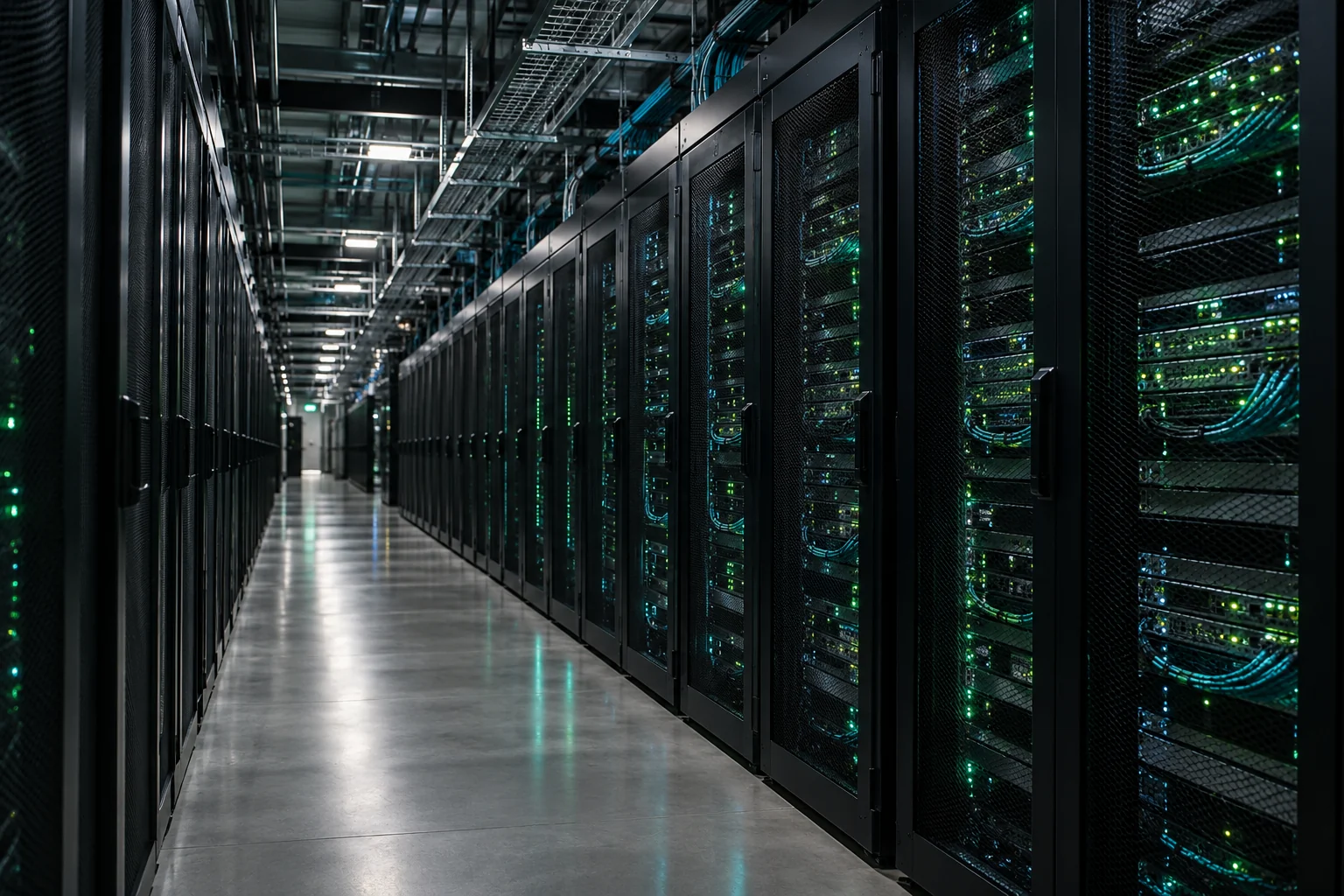
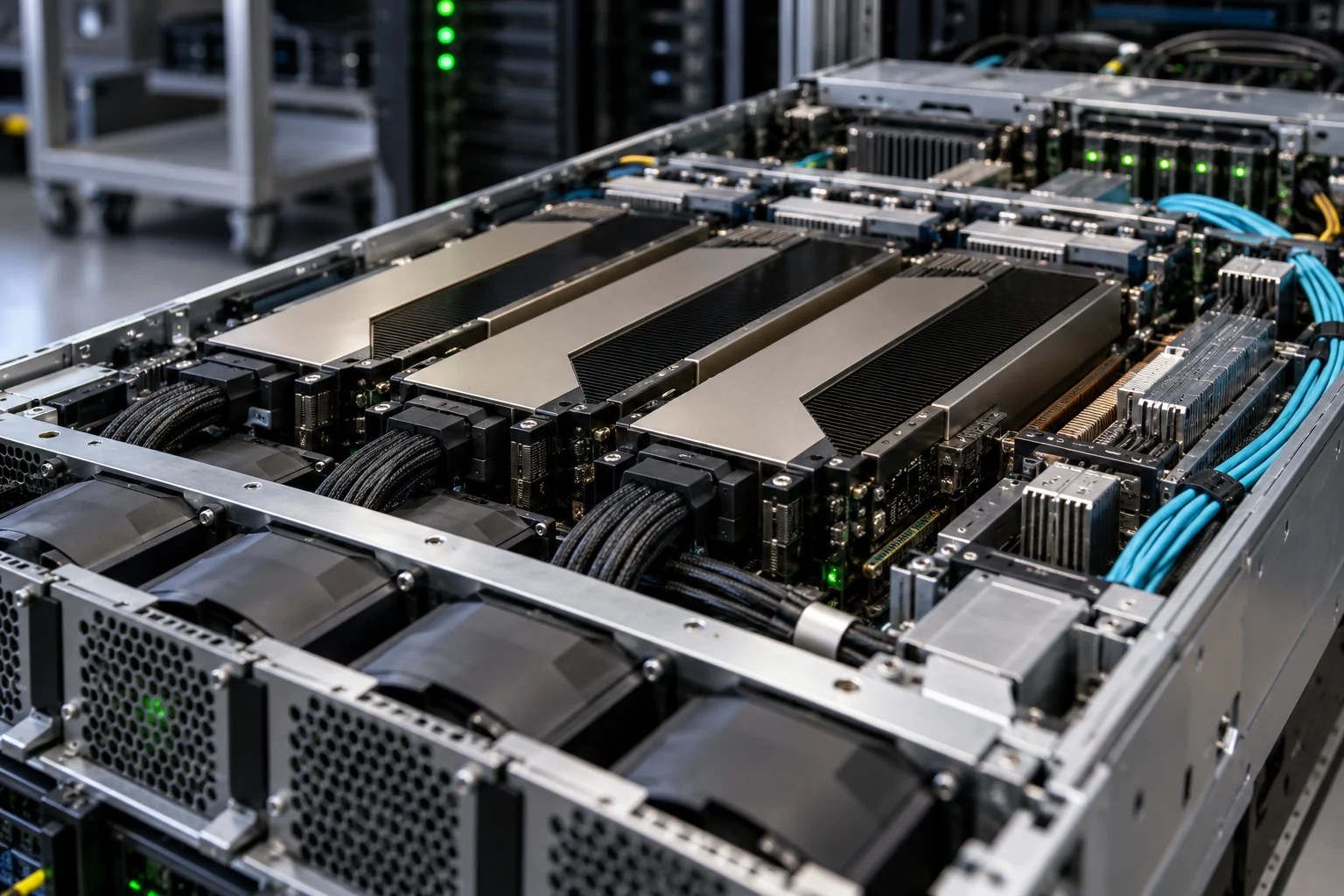
AI assists the operation; the competent municipal authority retains formal decisions, signatures and official actions. TITAN's production AI workloads run on NVIDIA Brev with models configured for each workflow.
A NEW GENERATION OF MUNICIPAL OPERATIONS
TITAN is not a traditional system with AI added later. It was designed from the ground up around connected data and AI integrated into operations. Information travels with the case, and AI can assist work across the workflow while rules and institutional authority keep every action under control.
Applications, documents, property, field evidence and case stages connect in one file with their sources visible.
AI does not live in a separate chat: it assists nearly the entire journey and helps turn municipal information into organized, traceable work.
Frontier models assist operations; rules, verifications and officials retain control of official actions.
CAPABILITIES EXPLAINED · LEADERSHIP AND IT
Data-first means institutional data, its provenance and relationships form the foundation of each case. AI-first means artificial intelligence is part of the system design and assists work across nearly the entire operation, not only citizen service. TITAN connects both with rules, evidence and accountable roles.
Open each area to see its inputs, the work it organizes and the responsible role.
The application, its documents, stages and responsible staff remain linked throughout the procedure.
Land use: applications use the TITAN municipal web form, not WhatsApp.
Product functional map. The modules and connections enabled at each municipality follow its implementation scope.
Four evidence groups—property identity, territorial context, field evidence and institutional checks—feed a digital case separately. The case passes through requirements and controls, document preparation and a decision by the competent authority, retaining state, responsibility, integrity and auditing throughout.
Property identifiers and relationships.
Layers, location and land conditions.
Visits, photographs, forms and documents.
Queries and checks for the procedure.
Documents, states, responsible staff and evidence remain linked without confusing the authority of each source.
Completeness, rules and explicit conditions.
Drafts, checks and traceable artifacts.
Sources provide different evidence; they do not replace each other.
MUNICIPAL REPLICATION
Implementing TITAN at another municipality starts from an existing foundation. The process separates reusable capabilities from each institution’s rules, sources and validation.
Reuse the platform’s capabilities, not another municipality’s case files or data. Timelines are defined by the scope and conditions of each implementation.
OPERATION AND CONTROL
TicoNeural confirms that TITAN’s published capabilities are operational. Institutional deployment configures access, regulations, permissions and responsibilities.
Read the product updateThe described connectors are operational. Credentials, permissions, rules and environments are configured for each institution without rebuilding the technology.
The design includes segregation of duties, recoverable states, strict validation, RACI, incident classification and procedures to restore, reconcile and retire capabilities.
EVALUATION QUESTIONS
Brief answers for leadership, technical, legal and citizen-service teams.
It is a Data-first, AI-first municipal ecosystem that connects data, case files, land, inspections, business licenses, documents and interoperability. AI is part of its operating design; official decisions remain under municipal authority.
Data-first means institutional data, its relationships and provenance structure operations. AI-first means artificial intelligence is integrated into the system design and assists nearly the entire workflow, not just a chatbot. TITAN combines that intelligence with rules, checks and traceability.
TITAN configures models by task, including GPT-6 Astra in applicable workflows. Its production AI workloads run on NVIDIA Brev infrastructure. The architecture connects models to municipal data, rules and processes without delegating official authority to them.
No. TITAN prepares, validates, routes and preserves evidence. Decisions, signatures and official actions remain with the competent authority and the controls defined by the institution.
TITAN operates integrations with VUI/PROCOMER, RNP, SIRI, GIS/ArcGIS, Survey123, CCSS, Hacienda and tax services, preserving each source’s permissions, traceability and authority.
Yes. The published integrations are operational in the ecosystem. A new institution configures its access, credentials, rules and permissions; the capability does not need to be rebuilt.
It receives the application, creates the case, identifies the property, reviews requirements, consults authorized sources, includes an inspection when required, prepares documents and preserves the decision, signature, delivery and archive under municipal control.
TITAN can consult or coordinate authorized institutional sources while retaining their provenance, permissions and state. This does not mean one source replaces another or that TITAN assumes its authority.
Through the TITAN municipal web form, embedded in the municipality’s website. The form is part of TITAN and links the application to its digital case file. These applications are currently submitted through that web form, not through WhatsApp.
THE FUTURE OF MUNICIPAL OPERATIONS
TITAN integrates frontier intelligence into operations and connects your institution’s data and workflows with the rules, permissions and accountable roles each municipality defines.
TicoNeural
We reply on WhatsApp
Hi, thanks for visiting TicoNeural. How can we help?
Send us a message and the conversation continues on WhatsApp with our team.
Official WhatsApp +506 6240 0831